Showing posts with label wellness. Show all posts

Friday, May 4, 2012

3 Healthy Television Habits


Many people when they come home from a day of work just want to sit down and relax for a little while. But fifteen minutes of relaxation can easily turn into hours glued to the couch when you're watching television. Here are a few things to get you off the couch and moving while still enjoying a little TV.


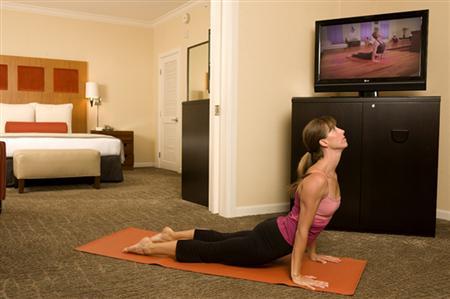
  1. Stretch. Just getting a little bit of basic stretching in can help you unwind both physically and mentally. This is a good practice to integrate into your routine, especially if most of your TV watching occurs before you go to bed. Try doing very basic moves like stretching out the hamstrings or shoulders. But you could also integrate something a bit more challenging like sun salutations to mix up your routine.
  2. Short intervals. If you are looking for something a bit more challenging, try incorporating some short interval work into your commercial breaks or the show itself. Things like crunches, jumping jacks, jumping rope, and pushups all make great little bursts of exertion. 
  3. Plan your week. If you're not looking to get physical during your downtime, try organizing your healthy activities for the week. Keep your to-do list going by scheduling your meals and workouts, making a grocery list, or organizing those recipes you've been meaning to try!

Wednesday, May 2, 2012

Stopping Stress Eating


Whether you are emotionally upset or simply stressed because of a busy schedule, digging into some comfort food can be a quick and easy way to temporary alleviate stress and make yourself feel better. But in reality we're harming our bodies and making ourselves feel guilty later when we take a step back and realize how unnecessary it all was and how you probably still have stress in your life. Food is a bandage for an issue, not a solution. Treating it as anything else when eating for comfort just leads to guilt and overeating. Here are a few tips to curb stress eating before it happens.

  1. Keep a food journal. Keeping a food journal will help keep you accountable for everything that you put into your body. It may not be a permanent solution but at least keeping one temporarily can help you recognize your patterns when it comes to stress eating and more effectively put a stop to them.
  2. Give yourself ten minutes, always. When you feel yourself gravitating toward the fridge or cupboard and you know you shouldn't, distract yourself for about ten minutes. Call someone, read a book, or look around online. Giving yourself a little breather from your cravings can help to get rid of them without touching a bite of food. If after a little while you still find yourself wanting something, try placing a single serving on a nice plate to enjoy.
  3. Make your meals and snacks a plan. This can go along with keeping a food journal, but make your meals happen at about the same time every day so you know when you're next opportunity to eat is. If you know that you're not going to have to wait all day for your next meal then you'll be less likely to overindulge at the one before it.
  4. Keep small servings. If there is a food you consistently find yourself eating too much of, only keep a small serving around the house at a time, or none at all so that you would have to go out if it was something you really wanted. We are much less likely to leave the house when a late night craving hits, and keeping a small amount instead of the bulk size is built in portion control.
  5. Recognize your own power. A lot of the time when you begin to stress eat you can feel like you've lost control of yourself. But in any situation, no matter how upsetting or stressful, you are still in control of your body. Recognizing that control is important because it can help you to assess where you are in a situation and take a step back when you are feeling emotional.
How do you deal with stress eating?

Friday, April 13, 2012

I Like Me, So You Don't Have To.


When people talk about healthy they talk about diet and fitness most often. However, if you're someone who has struggled with weight or yo-yo dieting, there is often something larger at play then an inability to do simple math and add up your calories. Many people struggle with feelings of not being important enough to be worth the extra effort that living a healthy lifestyle entails. Overcoming these feelings of inadequacy and learning to love and take time for yourself is an important part of any sustainable healthy lifestyle.


Self-esteem is not something that you either have or you don't. It is something that, like exercise, needs to be worked with in order to be maintained. Understanding why you take certain actions in situations is key to understanding how you feel about yourself. For example, if you find yourself at the fridge after a stressful day it is important to take a step back and think for a second about why you're there, how this makes you feel, and take a moment to reflect on your day. These small moments are essential to understanding yourself, and understanding yourself is essential to maintaining good self-esteem. 


If you find that you are doing something you do not like in your moments of reflection, it can be easier to actively change those behavior patterns and work toward becoming a person that you are proud of. Reward yourself for your small accomplishments and you may find the motivation to improve only increases. 


Liking and feeling good about yourself is the only way that a healthy lifestyle is sustainable. If you don't feel that you are worth it, no one else will either. I feel that we only get out of the world what we put into it. If you are putting out a feeling of high self worth and pride, you will most often receive that back from those around you. And on the few occasions that you don't receive positive feedback, it won't matter as much anymore because you know that you like yourself.

Wednesday, April 4, 2012

The Benefits of Having a To-Do List


I am a big fan of keeping a to-do list. It is a great way to stay on track on a daily basis without being too crazy or fumbling around trying to remember everything that you have left to finish by the end of the day. For some people, creating a to-do list is the last thing they would want to carry around with them. But I'm going to provide a few easy ways to make your list less stressful, and more of a motivator then a constant reminder of your busy schedule.
  1. Reduce your stress. Actually writing down a list of the things you need to accomplish can make the tasks seem less daunting then if you are just allowing them to float around in your mind all day. Having an organized list of what you need to do can help you relax and not stress out about it because you know you're less likely to forget everything that needs to be done.
  2. Prioritize. A list allows you to organize and reorganize based on what needs to be done first or what can be put off a little bit if things become too hectic throughout the day. Keeping your most important tasks at the top of the list, or written in a more bright color can help you focus on what is essential to your day before getting to the less important tasks. 
  3. Write down small things. This is something that I always do on my lists. I make sure to write down little things that I would do without thinking about but then I can still have them on my list. Things such as painting my nails, cutting up my veggies, or reading a chapter in my book are all often found on my to-do list. These help to fill out all the larger tasks and give me a good sense of accomplishment when I see that I can cross them off.
  4. Physically cross it off. Speaking of crossing things off your list, being able to physically draw a line through an item is good for you mentally. I know that when I've finished an item on my list, I feel really great when I get to go and cross it off. It gives me a sense of accomplishment. Whereas if you are just slogging away at your day-to-day tasks, you may forget how much work you actually do in your day. Having a physical representation of that work is a good way to reflect and feel good about yourself.
Do you keep a to-do list?

Wednesday, March 28, 2012

Spring Cleaning Your Life


Cleaning up the house in the springtime is often the perfect way for people to rejuvenate their home and living situation. Although people may be cleaning their homes, many often forget to do any clean-up in their personal lives, where it may be even more essential then the physical cleaning up of the home. Here are a few tips for reassessing where you're at personally, and how to go about "cleaning" up the situation.

  1. Clear the air. If you have someone in your life who you've had a falling out or argument with, now is a good time to remedy the situation. Or if there are conversations you've been avoiding the new season is a good time to address those issues. You should take the time to call the person and set up an in-person meeting so that you can address your issues on a more intimate level.
  2. Sweep out the mess. Perhaps you've gotten past the point of having a heart-to-heart conversation with someone and have decided the relationship is toxic. The next step is to remove that relationship from your life as much as possible in order to give yourself the best chance at personal and emotional success. Keeping yourself away from relationships that are surrounded by negativity and unfixable issues will help you maintain the positivity of your own life.
  3. Dust off annoyances. I am the type of person who does not get really angry easily. I do not often become mad at things the people I am close to do. However, I do become mildly irritated at the drop of a hat. If someone is driving to slowly for my pace, I am instantly annoyed. Recently, I've been working on letting go of these minor annoyances so that they do not impact my daily mood and well being. Letting go of these small irritations will help you relax and keep your stress levels down. The best way that I've found to go about this is to tell myself that whoever is upsetting me really has no bearing on my life or my day, and that I do not ever have to see this person again. Making myself realize how minor the annoyance really is allows me to let go of it more easily.
  4. Maintain the peace. Once you've reassessed your personal life and dealt with some of your issues the concern becomes maintaining the positivity and peace that you have attained. Not allowing yourself to slip back into toxic relationships or stressful irritations can be challenging, but once you keep at it, it will become easier as time goes on.
What are your go-to spring cleaning tips for your personal life?

Wednesday, March 14, 2012

Staying Fit While You Travel


When traveling it can be difficult to stick to your normal fitness routine. Your schedule is often different, and if you're there on vacation you may not always want to exercise. However, if keeping your routine as normal as possibile is important to you, these suggestions should help you get the most out of your next trip.

  1. Pack a few items. Bringing a few essential items with you can help get you to stick to your routine. If you're sneakers are in your suitcase staring at you every morning, I'm sure you will have to throw them on! Packing a few things such as running shoes, a resistance band, or an exercise DVD to pop into your laptop can be very helpful. You may want to avoid bringing too much equipment or heavier items such as free weights as this can lead to additional travel expenses and aren't really necessary for a small trip.
  2. Check your amenities. Before booking your hotel check and see what the hotel offers in terms of fitness. Look up the gym on the website and see if it offers enough of what you'll need in order to squeeze your workout in. If you can't find the information online, call and ask. And if the hotel doesn't really suit your fitness needs it may be beneficial to consider a different location that does if at all possible.
  3. Check local locations. A lot of local gyms and fitness studios have a small drop-in fee for a day of use, or fees based on individual classes. Do a little research before you travel and see what locations are close to where you'll be staying and give them a call. If you explain your situation to the person in charge they are more than likely going to be able to offer you some pretty decent options at a reasonable price.
  4. Walk. When all else fails try to walk as often as possible when traveling or sight-seeing instead of taking cabs or public transportation. You'll get more of a feel for the new area you're visiting and you'll be staying as active as possible.
  5. Use what you have. You can use a lot of basic items to help you get a workout in. You can use the chair in your hotel room to do step-ups, tricep dips, and a lot of other great exercise moves. You can also use basic household items as a substitute for free weights when you are visiting friends and family. Water bottles and cans of soup are good options.
What are your stay health and fit tips for when you travel?

Tuesday, March 13, 2012

Must Do Activities for Better Sleep


Getting a good night's sleep is an important factor in productivity, immunity, weight loss, and overall health. If you're not sleeping well, odds are you're not functioning at an optimal level on a day to day basis. Here are a few simple solutions to help improve your sleeping habits.

  1. Kick out afternoon caffeine. This one may seem obvious, but it is one rule that I break time and time again. If you pay attention to your afternoon caffeine intake and try and be done with coffee, tea, or any other caffeinated beverage by about 4pm, this should significantly help your ability to peacefully fall asleep.
  2. Eat a few hours before. If you try to fall asleep with a stomach full of food, chances are your body will be fighting against you because it is actively trying to digest what you ate. Eating at least two hours before you go to bed is ideal, most of the time I like to eat a little earlier than that because I think my stomach takes a long time to digest my food and if I eat too much before bed I'm never hungry for breakfast in the morning.
  3. Stretch. Taking a few minutes to stretch out your body before bed will help unwind your muscles and your mind. Anywhere from five to ten minutes of light stretching should help prepare you both mentally and physically for a restful night of sleep.
  4. Read or write. Instead of watching tv or being on your computer before bed, try taking a little bit of time with just you and the book you're reading, or take the time to write your to-do list for the next day. The glow of the computer can keep you mentally awake and keep you from being able to fall asleep. Reading however, can help calm your mind and relax you.
Do you have any tips you swear by to get to sleep more easily?

Friday, March 9, 2012

Beating the Mid-Afternoon Slump


At the end of a long week, almost everyone is dragging and just wishing the weekend would get here. Especially in those mid-afternoon hours, after you've had lunch but still have a few hours of work or school or whatever commitment you have left to go. Most people reach for sugar or coffee in order to ward off that tired feeling, here are a few alternatives to help you combat the mid-afternoon slump.

  1. Eat a light lunch. Eating something heavy or greasy for lunch will leave you with that uncomfortably full feeling that often leads to feeling tired and not being able to focus. Make your lunch a clean and light meal such as a fresh salad or fish and a side. Having a meal that is still filling but isn't weighing you down will keep you going through the workday.
  2. Stretch out your spine.  When that tired feeling hits, try a few desk stretches or if you can stand up and do a few moves. Particularly focus on stretching out your back, this can help give you the nice little rush of blood to the head that will provide an energy boost.
  3. Sip some tea. It may still be caffeinated, but not as heavily as coffee so it won't disrupt your sleep schedule if you have some in the afternoon. Sipping some green tea also provides a series of different health benefits. 
  4. Take a walk. Taking about a twenty minute walk over your lunch instead of remaining seated the entire time will help to keep you going. It will also help get the digestion of your lunch going, so that if you did indulge a little it shouldn't weigh you down quite so much.
  5. Have a snack. Plan to have a small snack a few hours after lunch. Try and incorporate complex carbs, protein, fat, and fiber into your snack. Such as some cheese and crackers or hummus and fresh vegetables.
Do you have any tips for staving of the afternoon slump?

Wednesday, March 7, 2012

On Negative Self-Talk


We're a few months into the new year now, and for many people that means their motivation is starting to slip and they feel like they may never reach their goals or resolutions. Having negative thoughts about yourself or your goals will ultimately lead to negative behaviors toward yourself and your worth. These behaviors will then become your habits, becoming harder and harder to break as time goes on. 


Tapping into your motivation begins by tapping into your mind, change all begins with a simple thought. Instead of talking to yourself negatively, consider how you speak to those around you. Would you ever tell your closest friend that she would never achieve her goals? If you talk to yourself like you talk to those you love you can plant the seed for better behaviors and higher self-esteem. 


Just taking a few seconds to monitor your thoughts as you have them can have a major impact on the way you see yourself and your actions. Awareness is the first and most important step to establishing healthy behaviors and habits for yourself. Once you become more aware you will be more able to accurately assess where you're at with your goals instead of just talking down to yourself.


Once you've reached a point of assessment begin to think about your goals and what you want. When you think about your goals you have to ask yourself if they are attainable from where you are at right now. If it seems impossible, consider setting a slightly smaller goal somewhere in the middle between where you are now and your ultimate goal. Having a more easily attainable midpoint will help you stick with it and you will feel rewarded when you reach that midpoint and motivated to keep going. 

Saturday, March 3, 2012

The 80/20 Rule


To maintain weight or lose weight successfully, you have to be mindful of what you put in your body just as much as the energy you put out. A good way to pay attention to what you eat is to follow the 80/20 rule. This is when 80% of what you eat is clean, whole, and unprocessed. The other 20% can be the foods you crave, treat foods, or anything else that might fall outside the "healthy" idiom. This rule promotes healthy eating as something that is sustainable over the long-term, as opposed to extreme diets that can do damage to your metabolism and cause you to actually gain more weight when you go off them.


Part of the rule is listening to your body and your mind when it comes to food. Take a second to think through your decision before grabbing for the cookie without a second thought. If you know you're going out to eat for a not-so-healthy meal later, make it a point to eat clean and healthily earlier in the day. Or if you have a few meals in a row that aren't so great, just focus on making better decisions for the rest of the week instead of dwelling on any slip ups that have already happened and are in the past. 


The 80/20 rule is all about moderation and sustainability, because living healthily is something that we need to able to do for our entire lives. If our diets are too restrictive, there will be no success because we will feel deprived and eventually succumb to temptation. Living somewhere in that gray area in the middle between two black and white extremes can be difficult, but finding balance and being mindful are two keys to living moderately and sustainably. 

Wednesday, February 29, 2012

Making a Major Life Change


I've been going to college for four years in some sort of art related field. At first I was involved in the fine arts, and then in the industrial design industry. Yesterday, I made the decision to leave my school, take some time off and decide what I really want to do. 

It was a very emotional day for me, potentially saying goodbye to a career path that I've spent several years working toward. However, the decision felt that it was the right one to make, and understanding that I needed to make a change was an important component to that. There were a few simple ways that I went about deciding to leave school, and I'll lay them out for you here as I believe they can be applied to many situations.

  • Am I happy when I am here? The first big indicator for me that something wasn't working is that I was becoming extremely dispassionate for a field that once excited me unlike anything else. I felt that when I went to my classes my passion and drive for the arts was slowly being pulled out of me and molded into something I did not want to be. My artwork has always been very expressive and emotionally driven, when I moved into the design world the lack of expression began to leave me cold. Asking yourself if you are happy can be a complicated question, and not an easy one to answer. But simplifying it a little and asking yourself if you are happy in that specific area of your life can make it a little easier to answer, especially when comparing it to other aspects of your life.
  • Do I feel better doing something else? Even though I just started doing this blog at the beginning of January, I've found myself wishing I had more time for it and wishing I had more time to go back to painting, which was another hobby I'd really enjoyed in the past. When I see that a post is getting a lot of views it excited me unlike going to class every day, and I realized that I felt better and my self esteem was much higher when working on this. The contrast between the boost I get from blogging and the emotionally draining experiences I was having in class became really apparent to me as time went on. If you find that you are happier doing a hobby you've picked up than you are at your actual job or chosen major, it may be time to consider a revamp of what you're doing.
  • Can I see myself here in the future? When I saw the future as an industrial designer. It didn't excite me, I saw myself becoming boring and doing the same thing day-in and day-out. I began to crave variety, and I feel a change is what I need in order to do that and explore my other options. If the future you currently see for yourself makes you miserable, that is probably a big sign that something in your present is not working for you.
  • When I come home, how do I feel? Often when I came home from class I felt really beat-down and unmotivated because I wasn't having success anymore at school and it began to effect how I felt in other aspects of my life. I haven't really done much in the past several months besides go to school, go to work, and do homework, and it was really beginning to effect my overall outlook. I think that if a negative situation has really infiltrated into other aspects of your life that would be a definite indicator that it is time to change it or cut it out.
  • If money was not involved would I still be here? This was the question that really sealed the deal for me about leaving school. I asked myself that if I did not have any money invested in school already, would I still be here? And my answer was that I would have been gone already. I may have some unnecessary student loans now, but if that is what it took to figure out what I really need to do with my life then it was necessary and I can move on from it. I think this question would be an essential one to ask when evaluating where you are in your life.
Have you made any major changes as of late? What did you do and how did you go about it?


Friday, February 24, 2012

Easy Mistakes People Make During Yoga


Yoga is all about stretching out the body and working out kinks in your muscles while also relaxing and centering your mind. However if you find yourself feeling a little off after your practice these might be a few reasons why.


  1. Not timing your breath. Part of the mind to body connection of yoga is keeping a fluid connection between the way you are breathing and the poses. This is meant to center and calm you, but also make you very aware of everything that your body is doing. When you don't focus on your breath as well as your body you make yourself more susceptible to injury and less likely to get the full benefits of the practice.
  2. Pushing yourself too far too early. Building up to flexibility can be challenging, but it is very important that you not try to force or push your body into a position it is not comfortable with. When getting into your poses push yourself only as far as when you can feel the stretch, but if you start to feel pain in your muscles or joints you should either rest in child's pose or come out of the stretch just a little bit.
  3. Not watching your knees. This is definitely one that I have been guilty of, particularly in the different warrior positions. Keeping your knee aligned with your ankle is essential for injury prevention. Bringing your knee over the ankle puts you at risk for hurting the joints. If you feel you can go deeper in the pose you should bring your back foot out more instead of pushing through the front.
  4. Bringing tension to your body. Part of the joy of yoga is releasing stress, so when you are stretching out one part of your body it is a bad idea to bring stress to another area. For instance when you are in something like camel pose you should relax your neck and allow your head to tip up toward the sky instead of trying to hold it up awkwardly. This will allow you to fully relax in your practice.

Wednesday, February 22, 2012

3 Things I Wish Someone had told Me about Healthy Living


For the past few years I've become much more invested in my long term health. I pay attention to what I eat, exercise, and try to be active in my everyday life. This did not happen overnight and it took some time for me to realize a few things that seem very obvious now. Here are a few things that I wish someone had told me when I first began my journey into healthy living.

  1. You'll miss the unhealthy things. Basically, when you eat crap you feel like crap. However, that doesn't stop me from occasionally wanting something that I know is full of chemicals and other horrible things. When the peanut butter cups at the grocery store are calling my name it can be pretty difficult to remember that they're full of trans fat. Finding a healthier alternative is key. I discovered Paul Newman's Organic Dark Chocolate Peanut Butter Cups. Everyday of eating well is a new challenge and understanding that giving in to a craving now and then is perfectly healthy.
  2. Strength training is just as important as cardio. My first real excursions into the world of exercise were purely on the treadmill and the elliptical machine. But in order to build lean muscle your body needs a balance of cardio and strength training with two or three days a week dedicated to each individually or an intervel training combination of the two.
  3. Working out doesn't mean you can eat whatever you want. I started exercising before I started paying any attention to what I put into my body. So while exercising I continued eating without paying attention to portion or the nutrients I was getting out of my food. What I didn't realize at the time is that being healthy is about 10% exercise and 90% nutrition. I could exercise for an hour, burn 500 calories, and eat that away in ten minutes by going through a drive through. When you start to make the connection between how long it will take you to burn off those french fries, they suddenly become much less appealing. 
What have you learned about healthy living? Anything seem so obvious now when you had no idea before?

Tuesday, February 14, 2012

Fighting Sugar Cravings


I crave sweets pretty much every day so around holidays such as Valentine's Day, when eating sweets is pretty much expected, I can have a hard time saying no. When a piece of chocolate is within arms reach, I generally have to have it so mentally preparing yourself or having tactics in place that will keep you from overindulging can be helpful. Here are some tips and tricks to ward off sugar cravings.

  1. Eat often. Not eating regularly throughout the day will make you ravenous, and this will cause your willpower to go down and before you know it, you'll have eaten something you did not intend to. Eating on a regular schedule throughout the day will keep your blood sugar level and your mind in the right place.
  2. Distract yourself. This one may seem difficult, but I know from experience that if I sit around focusing on a treat I know I shouldn't have, I just end up having it. Whereas if I go for a walk, start some homework, or do another activity I end up forgetting about it altogether.  Most studies say that the fifteen minute mark is when a craving will usually subside, so if you can occupy yourself for a short amount of time, you should be okay.
  3. Brush your teeth or chew gum. Anything that keeps that minty taste in your mouth will keep you from eating. Who wants a cookie after they just brushed their teeth?
  4. Try fruit. Fruit is full of natural sugar that can give the body just the little kick it needs if you're after something sweet. The endorphins we get when we eat a dessert are the same ones that are released when we have fruit. You will also get some fiber with your fruit which will help fight hunger.
  5. Indulge, a little. Being so strict with your diet that you never allow for any treats is unsustainable. Allowing yourself a dessert every now and again is an important component of any healthy lifestyle.
How do you stay away from unwanted sweets? Share your tips and tricks!

Thursday, February 9, 2012

Dieting Rules to Break


Everyone loves to eat, and that is why weight loss can seem so daunting at times. Many people think that in order to successfully lose weight you have to drastically alter everything about what you eat and how you live your life. However in most cases that is not true, living healthily has to be sustainable for the long-term, otherwise it will never function as a true change. There are guidelines given that can help you reach your goals faster, but here are a few ways to bend those rules a little bit to make them more attainable.

  1. Don't give in to cravings. This is one of the most common dieting rules, however it can also be one of the most difficult to follow, and you may not want to. If you constantly deprive your body of something it wants, or you constantly tell yourself no then you are setting yourself up for failure in the long run. Indulging a little bit now and then is important so that you do not feel like your new lifestyle is one of deprivation. Just try to indulge smartly, on a day you've exercised or a day where you haven't already had another calorie-laden treat. On that same note, you do need to watch for trigger foods, which can be that one food you just can't stop eating once you start. Be extra careful around these types of foods and don't keep them in the house.
  2. Stay off the scale. Another common misconception is that weighing yourself can make you obsessive or lead to becoming disheartened when the results don't seem to be coming fast enough. However, weighing yourself regularly is one of the best ways to stay accountable to your goals. Weekly weigh-ins seems to work best for most people, but if something different works for you than stick with that. Even though we may not like it, the scale is a tool that should be utilized to help us see what is working and what is not. 
  3. No eating after dinner. Weight loss is all about calories in versus calories out. If you find yourself hungry after dinner just make sure that you do not go over on your calorie allowance for the day. What time of day you eat is not nearly as important as what you're eating and how much. 
  4. Cut carbs. Another popular diet trope. And again, something that is not sustainable over the long term. Your body needs carbohydrates in order to function, so if you cut them from your diet it will be hard on your body and you will become exhausted and lethargic. Keeping complex carbohydrates in your diet such as oatmeal, quinoa, whole-grain breads, and vegetables is one of the strongest tools you have for feeling full and satisfied with your food. 
  5. Portion control everything. Portion control is essential when it comes to higher calorie foods, or foods you are likely to go overboard on. But it is a tool that can also be taken too far. Foods like green vegetables can be eaten freely without worrying about consuming too much because they have so many nutrients that the benefits to the body outweigh any overeating risks.

Tuesday, February 7, 2012

Health Benefits (and Detriments) of Tea

Tea has been my go-to drink as of late. I find myself bringing extra teabags with me to school and work to make sure my cup stays nice and strong. I've been drinking more tea because I've been trying to limit my overall coffee intake and tea is a nice substitution. Drinking tea also has many health benefits.

  • Clinical studies have found that sipping green tea can help to increase your metabolism. It does this by speeding up the oxidation of fat and improving sensitivity to insulin.
  • Black teas have the highest caffeine content and have been shown to make the drinker more mentally alert and focused. This is similar to the effects of drinking a cup of coffee.
  • Tea drinking has also been linked to stress relief. Scientifically, tea drinking has been shown to lower the levels of the stress hormone called cortisol. However, the act of actually drinking the tea may be therapeutic in itself, as the drink is warm and soothing. 
  • Theanine, primarily found in green tea has been show to improve the immune system by boosting the disease fighting T-cells in our bodies. Studies found that tea drinkers had up to five times more of these disease fighters than non-tea drinkers.
  • Chai tea has been show to be anti-inflammatory because of the ginger in it. Making it ideal for sipping after a workout or if you have an injury.

However it is possible to have too much of a good thing, or prepare your tea in a way that negates all the possible health benefits.

  • Avoid adding milk to your cup. The dairy has been shown to interfere with the healthy antioxidants in the tea.
  • Teas have been linked to heartburn so if you are someone who is sensitive to hot foods than a steaming cup of tea may not be the ideal way for you to get your antioxidants.
  • Overly steeping the tea can actually decrease the health benefits of the drink, so be sure to watch the steep time. Most teas only need to steep for two to three minutes.
  • As always you should be wary of artificial sweeteners because they are a man-made chemical and can disrupt your body's natural functions. A nice alternative is a small amount of honey instead.

Monday, February 6, 2012

Creating Time for Yourself

This semester is becoming the busiest of my time in college. Between homework and working part-time I hardly have any time to focus on activities that I enjoy outside of my design work. Creating this time for yourself is essential to cultivating a healthy lifestyle. Allowing yourself to relax and do something you enjoy is what keeps stress from taking over your life. 


The first thing to do in order to create more time for yourself is to tap into what your body needs. Pay attention to how stressed or tired you are at certain times throughout the day, and when you notice a pattern in your stress you can incorporate small breaks to allow yourself to relax. Fifteen minute breaks in between long sessions of working on something are a good way to rejuvenate and give your body and mind a small break.


Paying attention to how you eat throughout the day could also help to create more energy so that you are not drained at the end of the workday and can actually do something you enjoy. Eating at regular intervals (about every four hours) and drinking plenty of water will keep your  metabolism and mind revving throughout the day.


Once you've tapped into what you need in order to manage time more effectively, you should be able to find time for hobbies and activities you enjoy. I have found the most efficient way to do this is to keep a to-do list. I write down all of my homework, work schedule, exercise times, and then I also add in things like "read a two chapters of A Clash of Kings" or "manicure." Keeping these things on a to-do list allows me to keep them on my mind and also helps me to avoid procrastinating on homework and other essentials so that I can get to the fun stuff!

Wednesday, January 18, 2012

Fitness Tips for Finding Balance in a Healthy Lifestyle


Making time for exercise and healthy eating can seem impossible at times. There is always something else that could be done instead of taking time out for yourself. Here are some tips to help you incorporate healthy living into your daily life.

- Eat breakfast. Even if it is just something small. This may seem like an obvious choice but it makes the list because it is so essential to get your metabolism going in the morning by giving your body the fuel it needs to start your day. Try incorporating a little bit of protein, carbs, and healthy fat rather than just grabbing a carb-laden bagel.

- Keep healthy snacks on hand. I always keep a few things in my purse just in case I end up having to stay late at work or school. My essentials are raw almonds, and and apple. Having these snacks on hand has saved me more than just a few times from having to run to the vending machine or grab fast food. 

- Change up your routine. I get bored easily, and if I did not switch up my workouts every day I would be less likely to come back. Having something new or different to look forward to when you go to exercise will help keep you motivated and interested. As an added bonus, switching up your routine is best for your body because it keeps your muscles from reaching homeostasis from a repeated routine.

- Watch TV actively. At the end of the day I'll often watch my favorite TV show on my computer instead of on the television. Then I can tote my laptop around the house with me and take care of any chores I have instead of sinking into the couch. I will also watch while I cook some of my meals. This allows you to still enjoy your favorite shows while still being active.

- Integrate exercise throughout the day. When I am at school all day I'm often sitting during class. By the time lunch rolls around I'm ready to be up and moving, and often I will take a twenty minute walk around the block or up and down the stairs to wake up my body and sneak in a little extra activity. If you work at a job where you are seated most of the time I would recommend trying to walk up and down the stairs at work, it burns a lot more calories than you might think!


Saturday, January 14, 2012

Cheat Days

Oatmeal Scotchies will be the death of me.

Overall, I do not like the idea of a "cheat" day. My approach to my personal health and wellness is that one should incorporate higher calorie and not-so-healthy foods on a day to day basis. However, every once in awhile I do have to splurge and just have a day where I eat a few of my favorite things and relax. 

I tend to do this on a day when I've been active or am going to be active throughout the day, that way if I am eating a little more than usual I won't end up feeling bloated and sick at the end of the day. I definitely try and incorporate exercise on a day where I know I will want to indulge. For example, this morning I tried out Jillian Michaels: Shred it with Weights for the first time (Not my favorite of hers). So now I'm going to go ahead and have a few cookies! In the long run, it is only one day.

Twitter Delicious Facebook Digg Stumbleupon Favorites More